America 250 – a celebration of US
As editor and principle writer for Talk of JESUS .com I generally try to stay out of US politics, except in instances of direct challenge to sound Biblical doctrine.
(Besides, both political parties seem to have the unwavering support of the adversary of Christ.)
In a brief personal look of our history of God and Country and passing celebration of AMERICA 250, I’ll take a look back at our previous mile markers in the context of each 50 years that led up to these celebrations of US as well.
Consider this an Op-Ed piece. – RH
(You’re welcome to pass it along, but I’m not really interested in your comment for Brand X, etc..)
America the Beautiful and other Hymns
If you’re picturing the contest at Bunker Hill beginning with the Star Spangled Banner and fireworks following the American win, then you have some skewed perspective of American history.
Another patriotic lyric may have first been sung loudly in some colonial pub, later set to a hymn in time for America 150.
“My country ’tis of Thee, Sweet land of liberty..”
but the Loyalist original proclaims: “God save the King.“
Many America 250 celebrants will little note or long remember a lyric embedded in my own title today — God mend thine every flaw.
It’s from the second verse of an American hymn with many notable lyrics which define our view of the United States of America.

O beautiful for spacious skies
For amber waves of grain
For purple mountain majesties
Above the fruited plain!
America! America!
God shed his grace on thee
And crown thy good with brotherhood
From sea to shining sea!
Here are excerpts from some less familiar verses of America the Beautiful which many of us once sang.
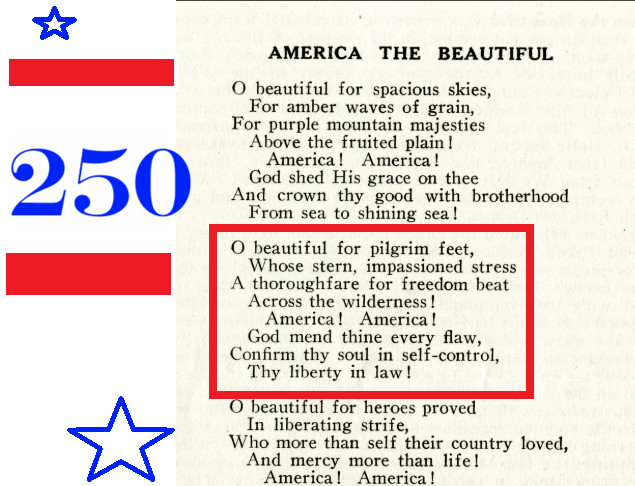
God mend thine every flaw
O beautiful for pilgrim feet
Whose stern impassioned stress
A thoroughfare of freedom beat
Across the wilderness!
A pilgrim, of course, is simply one sent to a foreign land; which of course The New World was to European explorers and settlers.
The Pilgrims of the Colony of Massachusetts were notably English and devoutly Christian.
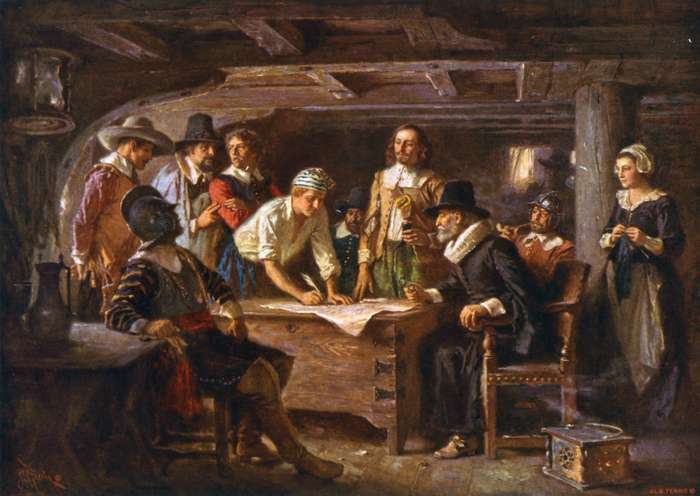
“God mend thine every flaw.”
WE THE PEOPLE can not do it, only God through our Lord Jesus Christ.
‘O beautiful for patriot dream
That sees beyond the years…
When Katherine Lee Bates wrote of the patriot dream, the US had grown to forty-four states. And Colorado (with its inspiration of Pike’s Peak {pictured behind her opening lyric}) would be admitted as America’s 38th state just after America’s Centennial celebration.
Looking back at Half-Centennial History
2026 of Common Era America 250
Most of you know too much of the political history of our recent past and many hold strong societally-influenced extreme positions; therefore I’ll say nothing more here beyond what I wrote in previous posts from AD 2013 to 2026 CE.
Here are links to some:
1976 – Bicentennial US
Some of us are old enough to have grown up at a time when America’s Bicentennial was all the rage. President Nixon had resigned rather face certain impeachment for his role in the Watergate break-in of the 1972 campaign. So by succession of the Vice President, Gerald Ford was President of the United States during another contentious time with deep political divisions. President Ford played a major role in the Bicentennial celebrations.
When President Ford and Queen Elizabeth danced together in the East Room at the White House in July 1976, the gesture symbolized the enduring bonds between the two nations.
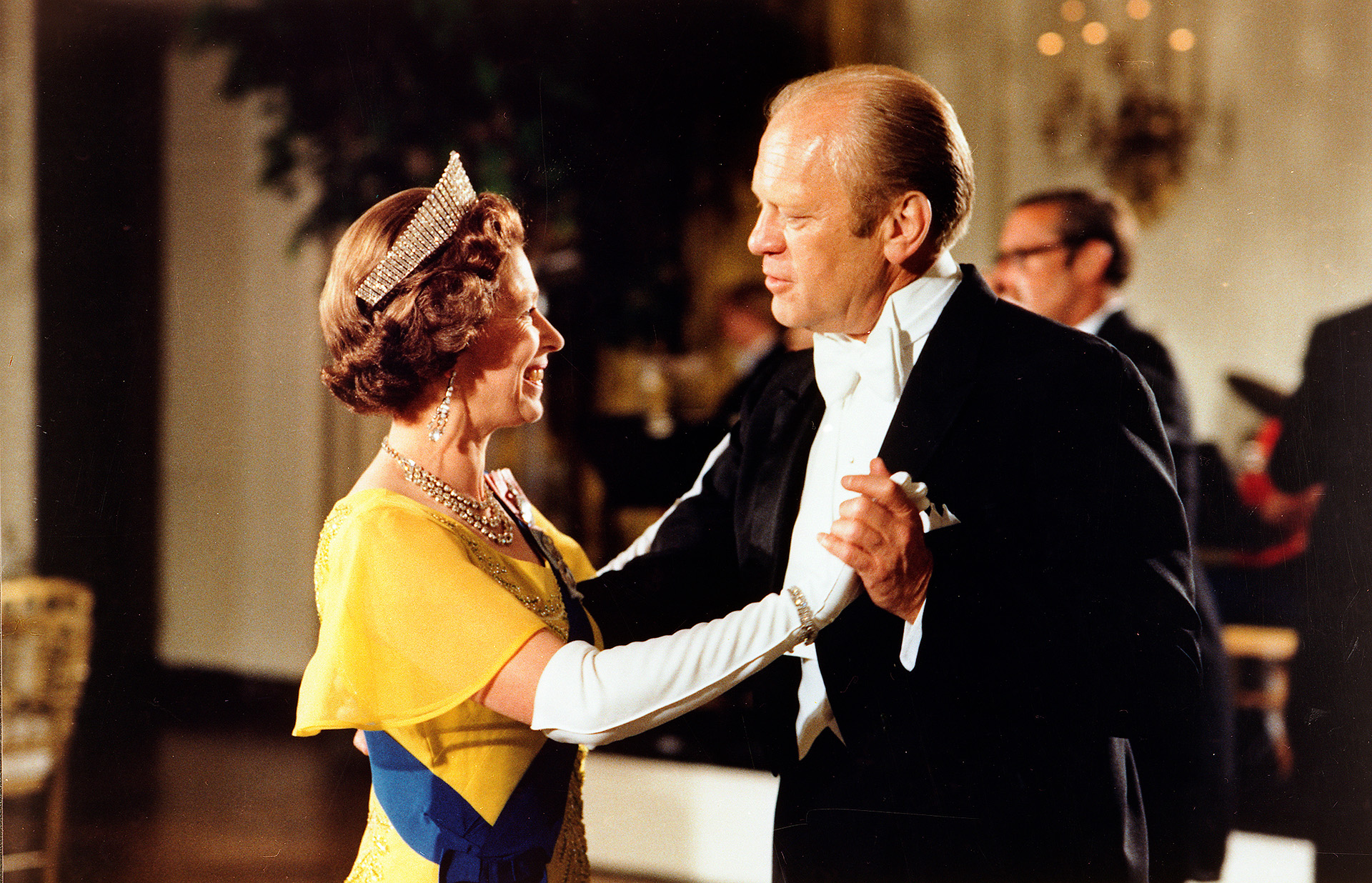
Besides the domestic problems of the US, the tumultuous times of the twentieth century had included the Viet Nam War of Presidents Johnson and Nixon and lost by the US; preceded by the Korean War ending in a divisive stalemate; World War II in which all of Europe nearly fell and America ended a Pacific war by dropping two atomic bombs.
And after the Roaring 20’s opulent optimism of well-heeled financial giants, the Great Depression devastated the economies of America and common men, women and children of most every nation.
1926 – 150 Years
Who could forget ‘the war to end all wars?’
President Woodrow Wilson thought to keep America out of Europe’s wars. This one which began in 1914 with an assassination of a royal of Austria-Hungary drew Americans into European trenches by 1917 after the sinking of a British passenger liner.
World War I saw women taking traditionally male jobs in large numbers for the first time in American history. Most women remained housewives.
US troops would stay in Germany for four years until President Warren Harding ordered the return of all remaining soldiers in early 1923.
source: Wikipedia
During post-civil war years reconstruction of the Olde South largely failed. Negros became paid slaves on the same lands. States rights allowed forced segregation between rich land-owners and any minority, especially those African forced-immigrants who had not escaped to a different poverty in the slums of the Midwest. So many just rented survival, yet faith in the same Lord sustained most, to whom the Church was their community and political place of common spiritual rescue.
Minorities could not vote. Only land owners, not renters. And until the Roaring 20’s women could not vote either. America had been founded by men with money who still lined the pockets of Washington’s politicians.
Men and nations conquering the great lands of America fought frequently for control of land and each other. In fact, colonial America would not end until Spain’s claims in the south and south-west were finally defeated in 1898 in the Spanish-American War.
AD 1876 – America’s Centennial
Colorado had just been admitted to the union of these United States out of the great expansion west into yet more untitled lands of the nations of native America. (You just read the emotional American lyrics originally inspired from Pike’s Peak.)
During the same year two non-European nations joined in an alliance to stop American momentum conquering the west, which had begun with the report of a Roman-Catholic missionary of a discovery of gold in Sioux territory of the Black Hills. Lakota and Cheyenne warriors led by Sitting Bull completely slaughtered the US 7th calvary under Custer at Little Big Horn.
US expansion began in ernest with President Polk’s policy in 1845 coined as manifest destiny. During this half century it was the sometimes divided and sometimes United States of America which claimed its New World power to annex and colonize from sea to shining sea. It was the dream of a growing nation that had nearly fallen apart at the Mason-Dixon line between an industrial North and an agricultural South.
The American Civil War known as Lincoln’s War set yet another battle in place about individual rights under state’s rights or federal oversight. Lincoln, then, was shot as his US Army had devastated the lands and leaders of the doomed Confederacy.
1826 – from Colonies to Country
Technically, the US had not been a country for fifty years in 1826. Here’s why.
The Articles of Confederation (cooperation) of the 13 colonies defined US in 1781 until the Constitution of the United States superceded it in 1789 and all thirteen States ratified it by 1790.
America’s national expansion of a later Monroe Doctrine had actually begun with one of its colonial Virginia founders, Thomas Jefferson, who signed a treaty with Napolean, Emperor of France (of all people).
His Lousiana Purchase in 1803 claimed expansion of colonies which had barely reached as far west as Pittsburgh, Now the western reserve of these colonies extended west to the Mississippi River and deep into southern colonies claimed alternately by Spain and France.
(Of course France and Spain had not asked the resident nations such as the Cherokee for some deed to their lands either,)
But even then, the United States envisioned by Thomas Jefferson and other founding fathers remained subject to fluid European whims of ambition in these rich lands. All of the States had men loyal to the country of their birth.
In 1812 the English thought to retake the Virginia colony and marched to James Madison’s White House and burned it down.
America’s second war of independence would not end until 1815 when Andrew Jackson would defeat the British once more, this time in Lousiana *which Jefferson had purchased from the French.
Did I mention *in a previous post that some of my forefathers were Loyalists and others were German Hessians hired by the Crown as mercenaries to fight against the rebels in New England?
To be continued… God-willing
NEXT:

Leave a Reply