Tag: Church

  • First Corinthians Synopsis- Do everything in love

    First Corinthians Synopsis- Do everything in love

    Love — exceeds wisdom, but does not exclude it.

    Would you say that this pretty much sums up Paul’s first letter to the Corinthian church?

    You desire wisdom (and some of you have it), but seek the love of God available to us through our Lord Christ Jesus.


    1 Corinthians 16:

    I recommend that you read 1 Cor 16 here [in the link above], since I will not detail much of this closing chapter (into which of course Paul's letters were not divided) in this brief synopsis. 

    Paul closes his epistle to the Corinthian saints first by asking for their charity to help the struggling and persecuted church in Jerusalem. (Their regimen should be like what the Apostle set in place for the Galatian churches.

    Part of the collection of gifts and delivery of other epistles (letters) always depends upon who may be available at the time.

    Paul is not in person, which is why he writes, and neither is Apollos.

    The Apostle closes his letter with several detailed instructions, explanations of where and why they travel with the Gospel, and specific mention of several individuals (to whom we will get after looking back at Paul’s entire epistle to the Corinthians).

    Basically, this is his personal closing like any of us would end a personal letter to loved ones.


    Corrective Behavior – Guided by Love

    Now these three remain: faith, hope, and love ​[agapē] — ​but the greatest of these is love.

    1 Corinthians 13:13 Christian Standard Bible
    We addressed this central theme of agape love in 1 Corinthians 13. 

    John MacArthur introduces Paul’s first letter to the Corinthians:

    Although the major thrust of this epistle is corrective of behavior rather than of doctrine, Paul gives seminal teaching on many doctrines that directly relate to the matters of sin and righteousness.

    In one way or another, wrong living always stems from wrong belief.

    John MacArthur :: Bible Introductions – 1 Corinthians

    Another introduction to Paul’s first epistle put’s it this way:

    Summary: 1 Corinthians addresses issues within the Corinthian church, emphasizing unity, moral integrity, and spiritual gifts.

    Paul advises on matters like divisions, immorality, and worship practices, highlighting love as the greatest virtue.

    He confirms the resurrection of Christ and its implications for believers.

    1 Corinthians Overview – Theme: Christian Living

    We might note Paul's caution in the verses preceding our opening verse here. 

    Many of you know this and understand that it has little to do with age and more to application of Christ's love in your mortal life.

    When I was a child,

    I spoke like a child,

    I thought like a child,

    I reasoned like a child.

    When I became a man, I put aside childish things.

    1 Corinthians 13:11 CSB

    The Apostle’s entire letter to worshipping saints of the church in Corinth sought to correct childish morals with the firm and gentle love of God.


    megas agapē – the Greatest Love

    In addition to Paul, advice on LOVE also proceeds from the words of Jesus.

    “Because lawlessness will multiply, the love of many will grow cold.

    Gospel of Matthew 24:12 CSB

    Christ is prophesying signs of the end of the age.

    Let the Common Era reader understand.

    Like the Apostles Paul, John and others, Jesus also addresses His followers (any disciples) as “little children.”

    “Little children, I am with you a little while longer…

    .. you are also to love one another.

    By this everyone will know that you are my disciples, if you love one another.”

    Gospel of John 13:33a,34c-35 CSB

    Paul’s great dilemma in ‘fathering’ the Corinthians was to correct some of these disobedient children in the faith with the love Christ commands for each of us who claim Jesus as Lord.

    The Wisdom of Mature Love in Christ

    What do you want? Should I come to you with a rod, or in love and a spirit of gentleness?

    1 Corinthians 4:21 CSB

    Now about food sacrificed to idols: We know that “we all have knowledge.” Knowledge puffs up, but love builds up...

    But if anyone loves God, he is known by him.

    1 Corinthians 8:1,3 CSB

    Speaking of human wisdom, Paul compares it by saying that ‘knowledge makes arrogant’ [KJV] gnōsis physioō;

    while agapē Love edifies [KJV].

    Grow-up from the wisdom of an arrogant child, beloved believer, into the love and faith in Christ Jesus who loved us so much as to have died for us. 

    And we all know and many can quote some translation of Paul’s famous ‘love chapter’ 13 highlighted above.

    If I speak human or angelic tongues but do not have love, I am a noisy gong or a clanging cymbal…

    13-1 CSB

    How many clanging christians in our Common Evangelicalism claim Jesus without love? 

    Love – ἀγάπη -agapē

    suffers long and is kind; love does not envy; love does not parade itself, is not puffed up…

    13:4 NKJV

    Synopsis of 1 Corinthians

    The opening and closing of Paul’s epistle both appeal to the individual love [agapē] of the Corinthians the Apostle knew and loved so well.

    He contrasted the morals and behaviors of those who challenged their faith in Christ Jesus to the childish ways of the wisdom of the world worshipping SELF — even with the crowds in Corinth’s temples of worship of myths and wisdom of the logic of mythological man-created gods and goddesses.


    Wisdom of the Cross *a few points

    * from ROAD MAPS for the PAULINE EPISTLES - Kress Biblical Resources
    • The church must deal with unrepentant sin. (5)
    • The church must deal with disputes among its members. (6)
    • Stay focuses on serving Christ whether married or single. (7)
    • The right practice and purpose of the Lord’s Supper (11)
    • Spiritual gifts should unify and build up the church (12)
    • Spiritual gifts should prioritize the proclamation of the truth to others in an orderly manner — not pacification of self. (14)
    • The RESURRECTION is certain
    • The RESURRECTION is supernatural
    • The RESURRECTION is our sure hope and motivation

    HOW IS YOUR CHURCH DOING WITH THESE?

    Paul loved the Corinthian saints as Christ has loved us.

    The Apostle closes his epistle with these important points:

    • Plans and communication are important for and effective gospel ministry.
    • Personal relationships and communication are important for and effective gospel ministry.
    In closing, let's look at what the Apostle writes to the leaders and saints of Corinth — and to the pastors and Sunday sheep of our Common Era christian flocks. 

    After all, when you write to someone you love, don't you want to leave them with a final thought about you and what you write to them?

    Final Exhortation

    16:13

    γρηγορέω – Be alert

    “Therefore be alert, because you don’t know either the day or the hour.[in which the Son of Man is coming.]

    Gospel of Matthew 25:13

    Be on the alert, stand firm in the faith, [NASB]

    στήκω – stand firm in πίστις – the faith

    Then he said to them, “Why are you afraid? Do you still have no faith? ”

    And they were terrified[filled with awe] and asked one another, “Who then is this? Even the wind and the sea obey him! ”

    Gospel of Mark 4:40-41 CSB

    ἀνδρίζομαι – act like a man [be courageous]

    andrizomai – Middle voice from ἀνήρ (G435) – man, husband, sir, fellow (not a boy or woman)

    κραταιόω – be strong.

    The boy grew up and became strong, filled with wisdom, and God’s grace was on him.

    Gospel of Luke 2:40 CSB

    6:14

    Let all that you do be done in love.

    1 CORINTHIANS 16:14 ESV – Paul’s closing appeal to the CHURCH

    Paul’s talking AGAPE here.

    Other translations read:

    • Let all your things be done with charity. – KJV
    • And do everything with love. – NLT
    • All that you do must be done in love. – NASB20

    One FINAL WARNING

    Whoever does not love our Lord Yeshua The Messiah,

    let him be damned. our Lord has come.

    1 Corinthians 16:22 – Aramaic Bible in Plain English

    Quite a CONVICTING affirmation!

    Other translations use simply Lord, or ‘the Lord Jesus Christ’ but the Person of their intent is the same Lord and God NONE dare oppose!

    1 Corinthians 16:22 Translations

    • let him be Anathema
      • accursed
    • that person is cursed
    • let that person be cursed!
      • tis & eimi (here) are not specific to males
    • a curse be on him.
    • Let anyone who has no love for the Lord be accursed.
    Don't get to hung up on the specific words — or English parts of speech. 

    The seriousness of the Apostle’s line-in-the-sand for Christians cannot be missed.

    The term “curse” translates from the Greek “anathema,” meaning something devoted to destruction.

    In the Jewish context, it referred to things set apart for God, often through destruction, as seen in Joshua 6:17 with the fall of Jericho.

    Paul uses strong language to stress the seriousness of rejecting Christ,

    aligning with Galatians 1:8-9, where he condemns any gospel contrary to the one he preached. This reflects the early church’s struggle against false teachings and the necessity of maintaining doctrinal purity.

    Biblehub.com Study Bible – 1 Corinthians 16:22

    a FINAL word

    Unfamiliar to MOST Common Era christians, Paul uses the words: μαράνα θάmarana tha – [English: “Maranatha“]

    Most English translations substitute its meaning — an invitation worthy of our most serious consideration.

    Of Aramaic origin (meaning our Lord has come).

    The Apostle concludes his epistle to the Corinthian church:

    The grace of the Lord Jesus be with you.

    My love be with you all in Christ Jesus. Amen.

    And thus do I conclude our study of Paul's First Epistle to the Corinthians, joining the Apostle in His love for all of you. 

    Talk of JESUS . com

    Comment on Scripture – Share the Gospel

  • Members in Christ’s body the Church

    Members in Christ’s body the Church

    And when he had given thanks, he brake it, and said, Take, eat: this is my body, which is broken for you: this do in remembrance of me.

    1 Corinthians 12:11 KJV – Paul quoting the Lord Jesus

    Paul now draws a picture of the human body in order that members of the body of believers might see our own part in the larger Church in Corinth and all places where the saints gather in Christ’s Name.

    Previously, when we departed from here in the Apostle’s instructions to the Corinthians, Paul instructs:


    And there are differences of administrations, but the same Lord.

    1 Corinthians 12:5 KJV

    One Body, many Members, different spiritual Gifts

    Now to each is given the manifestation of the Spirit, for the common profiting.

    1 Corinthians 12:7 BLB

    The first implication of this: EACH member of the body of your church and mine will show (manifest) some fruit of the Spirit.

    But one and the same Spirit works all these things, distributing to each one individually just as He wills.

    1 Corinthians 12:11 LSB

    Who belongs as members?

    IF someone in your church does not yet manifest any fruit of the Spirit, is it possible that the Lord has not given them the Spirit OR made these a part of His Body - a member of His Church? 

    Are even the best spiritualities of faithful jews and religious adherents of Islam connected to the body of our Lord Christ Jesus?

    Do the best of Hindus Buddhists and other pagan worshipers not oppose Christ?

    Yet some are drawn by the Spirit.

    The Body of Christ

    For just as the body is one, and has many members, and all the members of the body being many are one body, so also is Christ.

    1 Corinthians 12:12 Berean Standard Bible

    Jews and Gentiles

    map of the Aegean ~200 BC Corinth in the Achean League between Alexander the Great and Julius Caesar
    What is the overriding context of this epistle Paul writes to a church on the Achaian peninsula of Greece ? 

    The Apostle to the Gentiles (Hellenists or Greek or Roman) -- seeks to heal long-standing differences in this large Roman city of Corinth situated in the philosophic and cultural center of ancient Europe.
    • To one there is given through the Spirit a message of wisdom – v.8 (quite Hellenist)
    • to another faith.. to another gifts of healing v.9 (the One God of the Jews and ignored signs of the Messiah)

    For by one Spirit we were all baptized into one body—whether Jews or Greeks, whether slaves or free—and have all been made to drink into one Spirit.

    1 Corinthians 12:13 NKJV

    Invisible fruit pictured in the body

    brain and connection to the body

    For the body does not consist of one part, but of many. 1 Corinthians 12:14 BSB

    If the foot should say, “Because I am not a hand, I do not belong to the body,” that would not make it any less a part of the body?

    And if the ear should say, “Because I am not an eye, I do not belong to the body,” that would not make it any less a part of the body.

    • If the whole body were an eye, where would the sense of hearing be?
      • (Now think of the body of Christ, the church.)
    • If the whole body were an ear, where would the sense of smell be?
    Laughable! Hyperbole, yet logical.

    But now hath God set the members

    (And the Spirit of God has distributed your spiritual gifts.)

    But now hath God set the members every one of them in the body, as it hath pleased him.

    How strange a body would be if it had only one part!

    1 Corinthians 12:18 KJV and 12:19 NLT

    Do you get both the seriousness and Paul's practical ridicule of members di-vi-ded by spiritualities God granted to others? 
    The Apostle to the gentiles continues his illustration: 
    • The eye cannot say to the hand, “I do not need you.”
    • Nor can the head say to the feet, “I do not need you.”

    Here is Paul’s appeal to draw near to your members divided by opinions concerning spiritual gifts and an order of regulating the body (so to speak).


    On the contrary, the parts of the body that seem to be weaker are indispensable, and the parts we consider less honorable, we treat with greater honor. And our unpresentable parts are treated with special modesty, whereas our presentable parts have no such need.

    But God has composed the body and has given greater honor to the parts that lacked it, so that there should be no division in the body, but that its members should have mutual concern for one another.

    If one part suffers, every part suffers with it; if one part is honored, every part rejoices with it.

    1 Corinthians 12:22-26 BSB


    Appointment of the Greater Gifts

    The Apostle sent out to the Corinthians, Achaeans, Greeks, Romans and displaced Jews suggests an order of importance in the A.D. first century church. Yet Paul has just instructed the saints that it is the Spirit which places us in our place in the Church -- and that spiritual GIFTS are not ours to choose. 

    27 Now you are the body of Christ, and each of you is a member of it. And in the church God has appointed

    1. first of all apostles,
    2. second prophets,
    3. third teachers,
    4. then workers of miracles,
    5. and those with gifts of healing, helping, administration, and various tongues.

    A local (Corinthian) understanding of roles and spiritual gifts

    Acts Apostolos - Acts 1 of the Apostles begins a 28 chapter account of the chronicles of Christ's Apostles - a history of Christ's Church
    Acts of the Apostles 1-28

    1. ἀπόστολος – apostolos
    2. προφήτης – prophētēs
    3. διδάσκαλος – didaskalos
    4. δύναμις – dynamis
    5. χάρισμαcharisma 

    Apostles, Prophets and Teachers

    ἀπόστολοι (apostoloi)
    Noun – Nominative Masculine Plural
    Strong’s 652: From apostello; a delegate; specially, an ambassador of the Gospel; officially a commissioner of Christ.

    Am I not an apostle? G652 am I not free? have I not seen Jesus Christ our Lord? are not ye my work in the Lord? If I be not an apostle G652 unto others, yet doubtless I am to you: for the seal of mine apostleship are ye in the Lord.


    1 Corinthians 12:1-2


    1 Corinthians 12:28 – And God has set…

    You’ve just studied the list.

    So what does the Apostle Paul (#1 on the authoritative list) ask as he further questions the Corinthian saints of differing opinions about their own roles in the local church?


    1 Corinthians 12:29-30

    • Are all apostles? (#1)
    • Are all prophets? (#2)
    • Are all teachers? (#3)
    • Do all work miracles? (#4)
    • Do all have gifts of healing?
    • Do all speak in tongues?
    • Do all interpret?
      • (these 3 grouped in #5)

    SO WHERE DO I FIT IN?

    and Who is in charge of who, here in our local gathering of saints in Corinth?

    Perhaps in the hearing of Paul’s first letter being read to the Corinthian Church these saints might have wondered what the APOSTLE would prescribe next as a solution to OUR divisions.

    12:31 ζηλοῦτε δὲ τὰ χαρίσματα τὰ κρείττονα Καὶ ἔτι καθ᾽ ὑπερβολὴν ὁδὸν ὑμῖν δείκνυμι

    But covet earnestly the best gifts: – 31a KJV

    Now eagerly desire the greater gifts. – 31a NIV

    But earnestly desire the higher gifts.- 31a RSV


    But now let me show you a way of life that is best of all.

    1 Corinthians 12:31 b – NLT


    NEXT – Paul’s connection of GIFTS

    Beloved fellow saint, you may know where the Apostle proceeds in his much-quoted list from 1 Corinthians 14.

    Perhaps with love in mind you may have a COMMENT here on what the Apostle Paul has instructed us so far.

    Comment on Scripture – Share the Gospel

  • Your Communions in Church and in Christ

    Your Communions in Church and in Christ

    Communions, gatherings, worship services, church services — call them whatever you like. But the Apostle Paul provides some pointed correction for the church as we continue in 1 Corinthians 11.

    Communion – Sharing in the Lord’s Supper

    What’s the Apostle Paul saying to the Church?

    It’s an Exhortation

    Pretty strait-forward

    Paul addresses these communions (as the idolatrous feasts of Corinth he has already addressed) presenting a clear choice for godly saints of the Church at Corinth.

    v.17 In the following instructions I have no praise to offer, because your gatherings do more harm than good. – BSB


    for the Church

    Would you like to hear Paul's introduction in another way? 

    1 Corinthians 11:18

    • For first of all, when you come together as a church, I hear that there are divisions among you, and in part I believe it. – NKJV
    • In the first place, I hear that when you come together as a church, there are divisions among you, and to some extent I believe it. – NIV
    • For first of all, when you come together in the assembly, I hear that divisions exist among you, and I partly believe it. – HNV

    This is simply Paul’s FIRST POINT following the Apostle’s exhortation about sanctified living AND following his FIRST POINT about ROLES in Christian Worship within this section of his Epistle ordering Christ’s instructions for worship.

    The Apostle Paul specifically points to times when we assemble [or come together] συνέρχομαι – synerchomai as a CHURCH ἐκκλησίᾳ – ekklēsia.

    Many of you know this Greek word for church. 

    LOOK at its definition
    (nothing specifically yet about communion here. But read on.)

    The Apostle then continues in his outline for Christian gatherings.

    Sharing in the Lord’s Supper ( 11:17⁠–⁠34 )

    church supper

    An exhortation for social and festive meals in the church community

    Now then, when you come together, it is not the Lord’s Supper you eat.

    21 For as you eat, each of you goes ahead without sharing his meal. While one remains hungry, another gets drunk.

    22 Don’t you have your own homes in which to eat and drink? Or do you despise the church of God and humiliate those who have nothing?

    What can I say to you? Shall I praise you for this?

    No, I will not!


    The Apostle’s transition into this section had been:

    Be ye followers of me, even as I also am of Christ.1 Cor 11:1 KJV


    Paul's focus:

    Our communions other than Holy Communion

    For there must be also heresies among you,

    that they which are approved may be made manifest among you.

    1 Corinthians 11:19 KJV

    * In the first major schism of the Church in the A.D. 11th century the Roman Church divided from the Orthodox Church. See the Timeline in the link above.

    Common Era christians dare not mention such things as HERESY, lest we offend some unbeliever in our gathering or sharing in breaking bread with us at an occasional community evangelism feast. 

    We prefer a gentler approach of translations of αἵρεσις - hairesis like: factions or divisions or differences.

    11:20 συνερχομένων οὖν ὑμῶν ἐπὶ τὸ αὐτὸ οὐκ ἔστιν κυριακὸν δεῖπνον φαγεῖν

    When ye come together therefore into one place, this is not to eat the Lord’s supper.

    First Epistle of Paul to the Corinthians 11:20 KJV

    Does the Apostle then instruct the Church NOT to share in Holy Communion?

    NO, certainly not.

    Only not to participate in such a community meal alongside unbelievers (EVEN ‘at church’ ), including those who are not in Christ in this Holy Sacrifice of Communion as worship.


    The Lord’s Supper

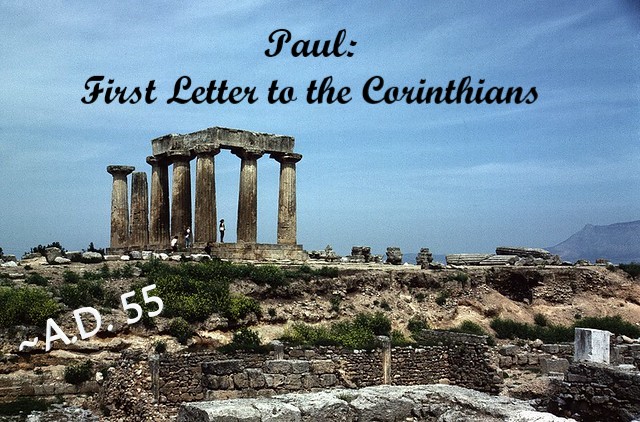
    You may want to READ some of the Gospel including these Holy Scriptures, but I urge you for now to remain focused on the Apostle’s INSTRUCTION specifically to saints of the Church at Corinth (in ~ A.D. 55).

    Gospel cross-references to the Lord’s Supper

    King James Version


    a HOLY Communion in Christ celebrated by the Body of Christ

    Holy Communion the Bread and Cup of salvation in Christ  for the body of Christ the Church

    For I have received of the Lord that which also I delivered unto you..

    1 Corinthians 11:23a KJV

    Paul here reiterates from the Gospel accounts that which the Apostle had already instructed in person.


    .. That the Lord Jesus the same night in which he was betrayed took bread:

    And when he had given thanks, he brake it, and said, Take, eat:

    this is my body, which is broken for you:

    this do in remembrance of me.

    After the same manner also he took the cup,

    when he had supped, saying,

    This cup is the new testament in my blood:

    this do ye, as oft as ye drink it,

    in remembrance of me.

    First Epistle of Paul to the Corinthians 11:23-25 King James Version

    An Apostolic Application

    Once again, Paul has already WRITTEN:

    • NOT to eat Food Sacrificed to Idols AND taught lessons of the Jews’ exodus from Egypt concerning their idolatry.

    For as often as you eat this bread and drink the cup, you proclaim the Lord’s death until he comes.

    1 Corinthians 11:26 ESV

    The Apostle had reminded the saints of Corinth earlier in his letter of both his authority and humility in Christ confirming:

    • I have applied these things to myself [THEREFORE] learn from us not to go beyond what is written.
    • Paul’s instruction consequently will require the saints of Corinth:

    Let a person examine himself, then, and so eat of the bread and drink of the cup.

    1 Corinthians 11:28 ESV


    27 Therefore, whoever eats the bread or drinks the cup of the Lord in an unworthy manner will be guilty of sinning against the body and blood of the Lord. – BSB

    Commentary – Study Bible [below]

    • The term “unworthy manner” suggests a lack of reverence or self-examination
    • The “bread” and “cup” symbolize the body and blood of Christ, and partaking in them requires a heart of humility and repentance.
    • To be “guilty of sinning” implies a serious offense, akin to profaning something holy.

    For he that eateth and drinketh unworthily, eateth and drinketh damnation to himself, not discerning the Lord’s body.

    First Epistle of Paul to the Corinthians 11:29 King James Version

    If we would judge ourselves
    The Apostle offers a few additional reasons to examine ourselves before these communions with the world and the Holy Communion of the saints of our local church. 
    • That is why many among you are weak and sick,
    • and a number of you have fallen asleep.
    • Now if we judged ourselves properly, we would not come under judgment.
    • But when we are judged by the Lord, we are being disciplined so that we will not be condemned with the world.

    In conclusion, Paul reiterates about their divisions over their communions.

    ἐκδέχομαι – ekdechomai 

    33 Wherefore, my brethren, when ye come together to eat,

    tarry one for another.

    translates the King James

    1. to receive, accept
    2. to look for, expect, wait for, await: ἀλλήλους ἐκδέχεσθε wait for one another, namely, until each shall have received his food, 1 Corinthians 11:33, cf.

    PAUL closes this section of his letter about divisions stating that he has more to say about other issues later in person.

    “.. And when I come, I will give instructions about the remaining matters.


    Judge for yourself

    English translation: pictures Table Man Wine Mug Food Food Religion Text added to photo What's wrong with you Communions?

    Comment on Scripture – Share the Gospel