Tag: herod

  • ACTS of the Herods 25

    ACTS of the Herods 25

    The not-so-great HEROD’s – client-kings of the Jews

    “BUT WAIT,” you may be thinking; “we were following ACTS of the APOSTLES and Paul.”

    Note the timeline above with its anti-Christian timeline bias utilizing BCE (Before the Common Era) rather than B.C. (Before Christ). 

    What IF history had recorded the politics of the JEWS and ROMANS in place of the truth of Christ?

    We would have read nothing of Herod’s killing of the innocents (trying to prevent the birth of the Messiah JESUS).

    • OR of Jewish and Roman injustice of the Cross of Jesus – KING OF THE JEWS!
    • OR any account of the leading Pharisee Saul of Tarsus proclaiming Christ risen to all the world as far as Rome.

    NO —  Luke’s detailed account of the Apostles would have been buried in the politics of A.D. 1st century Caesars and certain Kings preordained by the Lord God to fail in their temporal empires and kingdoms —  Herod’s and Caesar’s opposed to JESUS, the very Son of God redeeming a chosen remnant of sinners — sinners from every nation of the world and sinners from every time since the beginning of mortals and the end of our timeline in eternity.

    Acts from Herod the Great to Herod Agrippa II
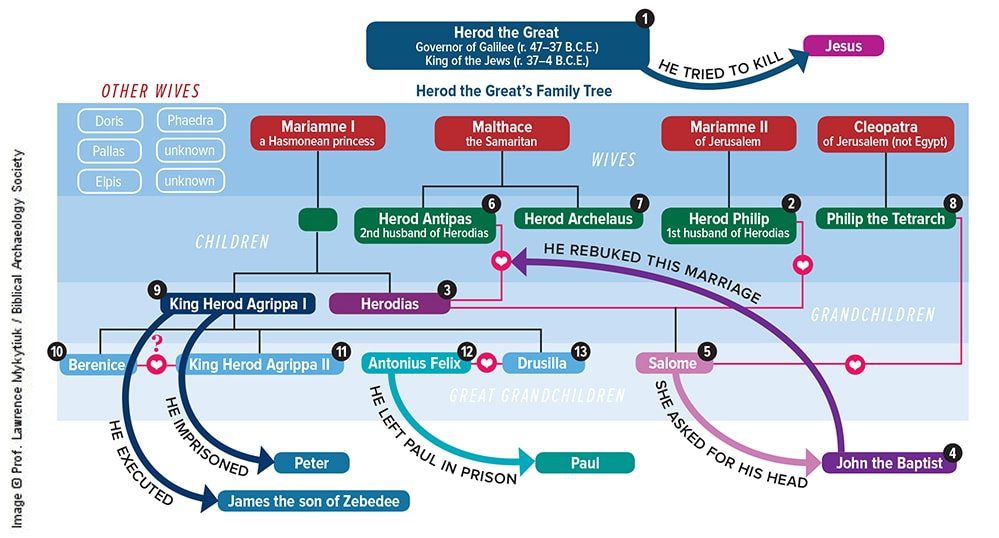
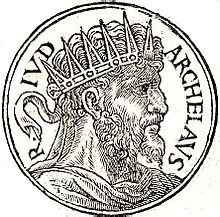
    family tree of the Herod's from Herod the Great

    In order to understand Roman administration of captive kingdoms or Roman states of the Herod’s, as well as something of the fall of Jerusalem which will soon take place, let’s take a look at the WHO’S-WHO of this client dynasty as we proceed in the Acts of the Apostles.

    the politics of King Agrippa and Festus

    A PLEASING PUBLIC POLITICAL MEETING 

    Now several days later, Agrippa [II] the king and Bernice [his sister] arrived at Caesarea and paid their respects to Festus [the new governor].

    Acts of the Apostles 25:13 AMP

    While they were spending many days there [in the Roman capital of Caesarea] , Festus laid Paul’s case before the king…

    Make no mistake about it — Rome is in control, but in order to rule effectively Roman governors use local political powerhouses to govern public opinion.

    Political Protocol of the Pax Romana

    Luke refers to our main player in Paul’s case as, “King Agrippa,” but to Rome, Julius Marcus (AKA Herod Agrippa II) is simply one of several useful foreign kings.

    .
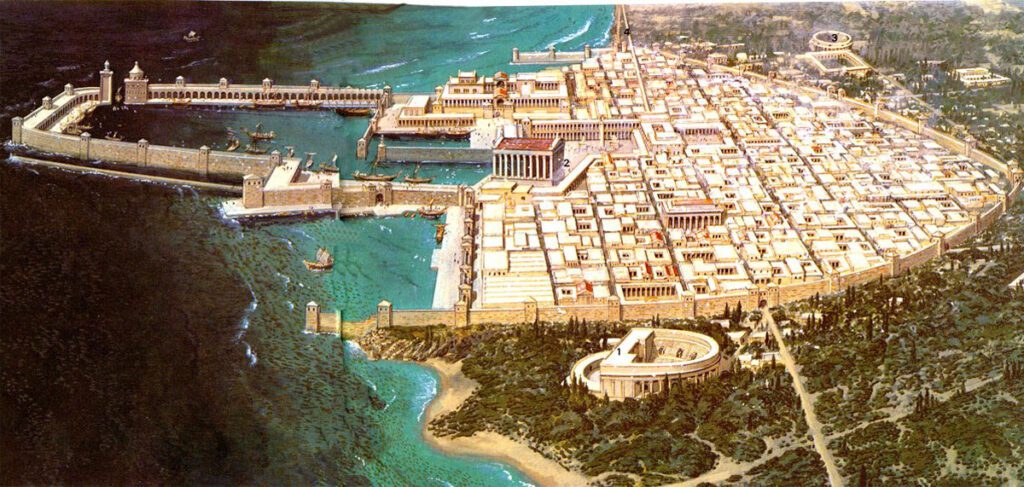
    Caesarea! a model of Roman incursion into all the world of the Mediterranean - a key port for Romans, a city where Cornelius, Philip, Peter, Paul and others brought the gospel

    He brings with him his sister, oldest daughter of Herod Agrippa I as they formally and publically meet Governor Porcius Festus in Caesarea.


    Luke continues with the political problem of Paul left to the new Prefect Festus:

    saying (to Agrippa) [NKJV],

    “There is a certain man left a prisoner by Felix, about whom the chief priests and the elders of the Jews informed me, when I was in Jerusalem, asking for a judgment against him.

    Note that this new Roman Prefect has already been in Jerusalem without meeting with King Agrippa. 

    To them I answered,

    ‘It is not the custom of the Romans to deliver any man to destruction [ἀπώλεια] before the accused meets the accusers face to face, and has opportunity to answer for himself concerning the charge against him.’

    Certainly this newly appointed Governor of Judea is familiar with the problem of the JUDGMENT of JESUS the King of the JEWS by a previous Governor Pontius Pilate.

    Therefore when they had come together, without any delay, the next day I sat on the judgment seat and commanded the man to be brought in.

    The Roman Governor has already judged the Roman citizen Paulos (in Jerusalem) before this political appeal of King Herod Agrippa II. 

    The Governor continues his account of Paul’s recent trial over which he presided:

    “When the accusers stood up, they brought no accusation against him of such things as I supposed, but had some questions against him about their own religion and about a certain Jesus, who had died, whom Paul affirmed to be alive.

    Now full-well knowing the controversies centered on the Christ of the Jews, Governor Porcius Festus addresses Julius Marcus Agrippa II as a politically impartial third party with interest in the case of the Governor's prisoner. 

    And because I was uncertain of such questions, I asked whether he was willing to go to Jerusalem and there be judged concerning these matters. But when Paul appealed to be reserved for the decision of Augustus [the title of the Roman emperors], I commanded him to be kept till I could send him to Caesar.”
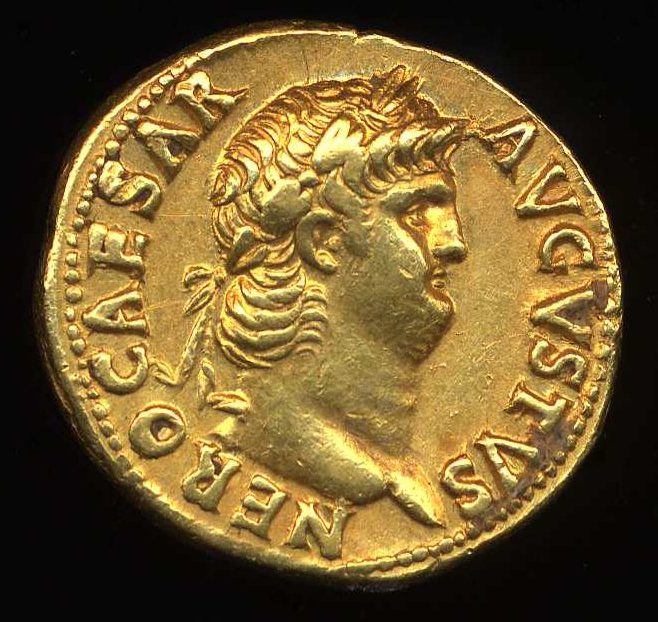
    Roman Coin with profile of Nero Caesar Augustus

    Nero Claudius Caesar Augustus Germanicus, no friend of followers of The Way, had appointed Portus Festus as Governor of Judea.

    Herod Agrippa’s play for power

    Then Agrippa said to Festus,

    “I also would like to hear the man myself.”

    “Tomorrow, you shall hear him.”


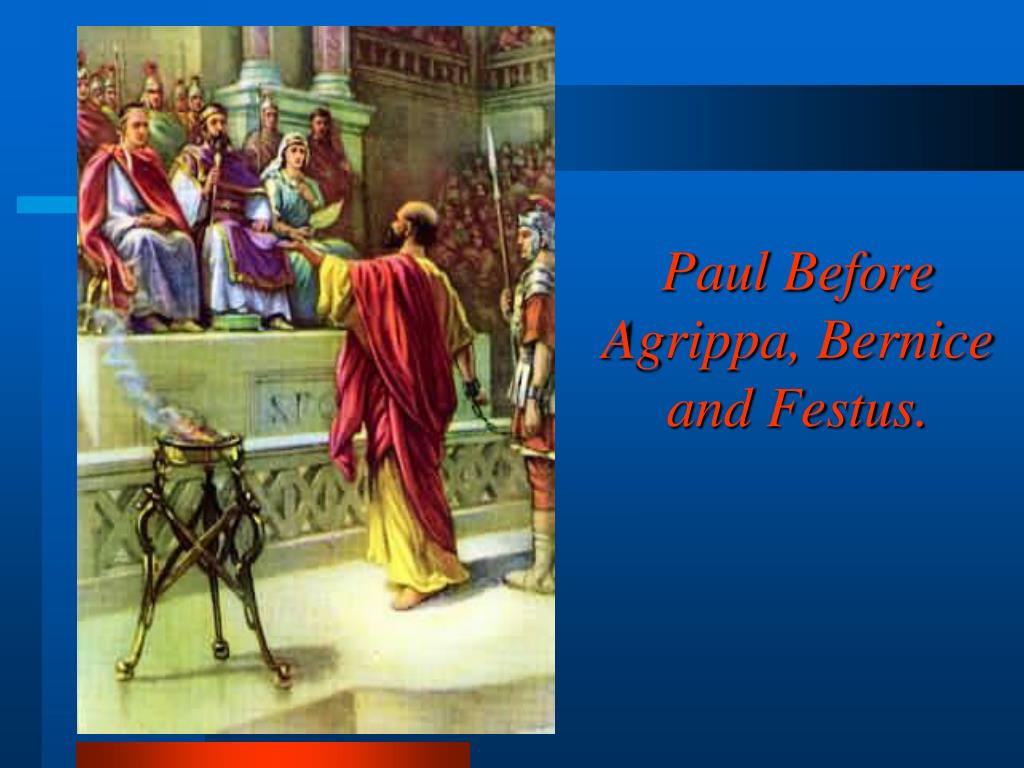
    So the next day, when Agrippa and Bernice had come with great pomp, and had entered the auditorium with the commanders and the prominent men of the city [Caesarea], at Festus’ command Paul was brought in.
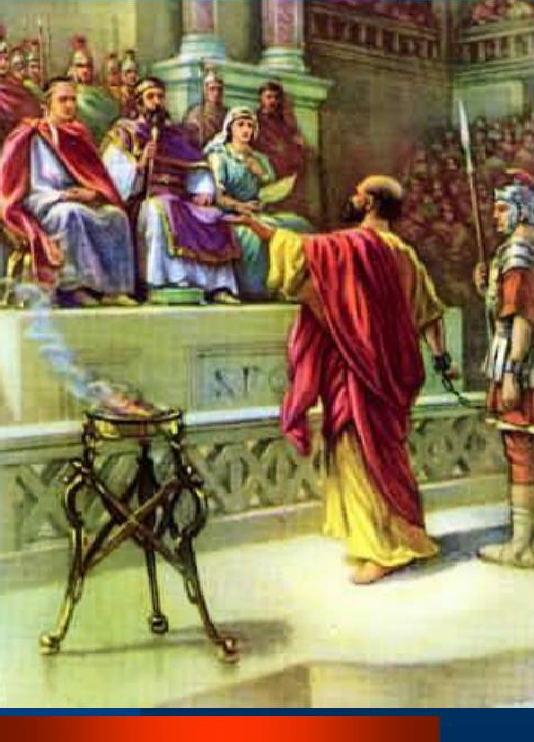
    And Paul said, “I would to God that not only you, but also all who hear me today, might become both almost and altogether such as I am, except for these chains.” - Paul addressing Festus, Herod Agrippa II and Bernice - Acts 26:29
    REMEMBER: 
    ROME's Governor is in charge. The Prefect of Judea repeats what he has already told King Herod Agrippa II.

    And Festus said:

    “King Agrippa and all the men who are here present with us,

    you see this man about whom the whole assembly of the Jews petitioned me, both at Jerusalem and here, crying out that he was not fit to live any longer.

    But when I found that he had committed nothing deserving of death, and that he himself had appealed to Augustus, I decided to send him.

    The Governor is confirming Paul's legal disposition as well as his own fair hand in his decision of the Court.

    “I have nothing certain to write to my lord concerning him.

    Festus, wanting to present some facts to his lord Caesar in Rome, invites these Jewish leaders and accusers of Paul to give him the facts. 

    The Governor would not have had to send any facts to Nero, but out of Festus' astute political savvy he has an audience of all who could object to his decision.

    Therefore I have brought him out before you, and especially before you, King Agrippa, so that after the examination has taken place I may have something to write. For it seems to me unreasonable to send a prisoner and not to specify the charges against him.”


    Brilliant! Let the local king provide their case to Caesar (who could only blame Felix or the Jews AND NOT him).

    Then Agrippa said to Paul, “You are permitted to speak for yourself.”

    So Paul stretched out his hand and answered for himself:

    Acts of the Apostles 26:1 NKJV

    Once again, the Governor sets the tone of his meeting of all who had accused Paul.

    Festus begins by allowing the defense of this Roman citizen already found innocent to proceed BEFORE hearing ANY Jewish charges.

    Furthermore, Governor Festus invites Paul to speak directly to him and to Herod Agrippa II (client king of the Jews) FIRST.

    “I think myself happy, King Agrippa, that I am to make my defense before you this day concerning all the things whereof I am accused by the Yehudim…

    Acts of the Apostles 26:2 – Hebrew Names Version


    The ACTS of the Apostle Paul (in court again) — To be continued…

    Talk of JESUS . com

    Comment on Scripture – Share the Gospel
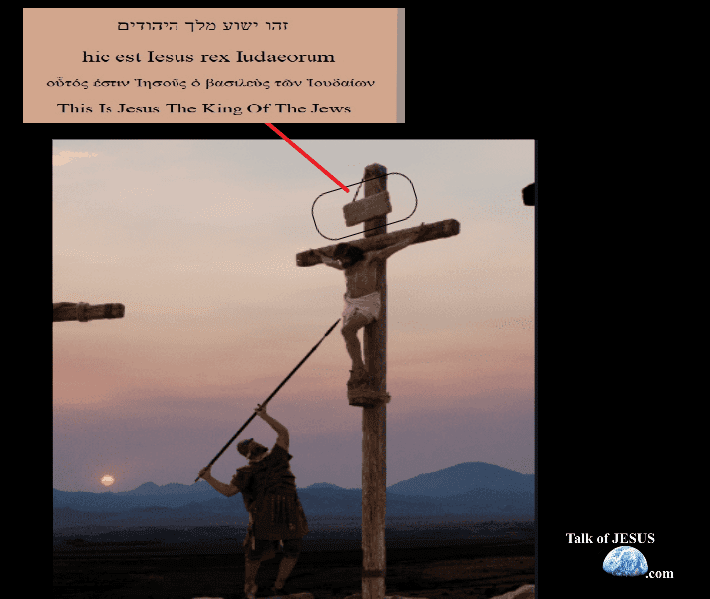
  • Who IS this KING OF THE JEWS nailed to a Roman Cross?

    Who IS this KING OF THE JEWS nailed to a Roman Cross?

    “Are you the king of the Jews? ” the governor asked him. Jesus answered, You say so.”

    — Matthew 27:11 (CSB)

    Religion — Mingled with Politics – A.D. 30’s style

    You know the old expression about mixing religion and politics -- ('Don't do it' all warn. Yet in every century our religious and political leaders rely on it.) 

    Today, Good Friday 2025 of the Common Era, we will address both!

    The POLITICS of ROME mingling with the RELIGION of JEWISH rulers of first century Jerusalem.

    First, ROME and the rule of Pilate, the Roman Governors, several Caesars and captive/cooperative kings. This of course would include several King Herod’s and various Governor Herod‘s.

    The cooperative nature of the Roman peace made strange bedfellows, so to speak.

    Although it all comes to its pinnacle in the trial of Jesus Christ, the politics of these Roman and faux-Jewish governors and subject-kings will continue to affect the Apostles and saints well beyond Jerusalem’s destruction by Rome just forty years from this pivotal day in history.

    For MORE insight into the politics of first century Jerusalem take a look at the above post from September, A.D. 2020. - RH 

    The Governor’s Examination of the Jewish King Jesus

    From Pilate’s early-morning awakening by Jerusalem’s Jewish officials it began like this (as reported by Matthew, Jesus’ Disciple who had himself had an official tax-collecting post for Rome).

    After tying him [Jesus] up, they [the chief priests and elders of Jerusalem] led him away and handed him over to Pilate, the governor.

    — Matthew 27:2 (CSB)

    At this point Matthew reports nothing more of the examination of Jesus by Pilate.


    Let’s look at the testimony of the other Gospels.

    So Pilate asked him, “Are you the king of the Jews? ”

    He answered him, “You say so.”

    3 And the chief priests accused him of many things.

    Pilate questioned him again, “Aren’t you going to answer? Look how many things they are accusing you of! ”

    But Jesus still did not answer, and so Pilate was amazed.

    – Mark 15:2-5 (CSB)

    (The Gospels witness this mix of the Jewish false charges and the examination of the Governor in this brief early-morning balcony scene of sorts.) 

    Let’s move back a bit further in the transition of the actions which brought the accused King Jesus of the Jews before the Roman Governor.

    Luke 23:

    Then the whole company of them [the gathering of the Council] arose and brought him before Pilate. And they began to accuse him, saying,

    “We found this man [Jesus] misleading our nation and forbidding us to give tribute to Caesar, and saying that he himself is Christ, a king.”

    And Pilate asked him,

    “Are you the King of the Jews?”

    And he answered him, “You have said so.”

    Then Pilate said to the chief priests and the crowds,

    “I find no guilt in this man.”

    But they were urgent, saying,

    “He stirs up the people, teaching throughout all Judea, from Galilee even to this place.”

    Gospel of Luke 23:1-5 ESV

    Do you see the political manipulation here?

    Can you see the contemptable REJECTION of Pilate’s authority by the same religious officials?

    They falsely claimed that JESUS would not allow Jewish followers to pay a Roman tax to Caesar — a tax which of course funds the Roman Governor and legions overseeing this captive city of Jerusalem.

    Therefore the next POLITICAL move of both the Governor and these Jewish religious officials is to send the case to a more mutually agreeable jurisdiction – that of the Roman-appointed King legitimately appointed by the Caesar’s from the ruling family of the Herod’s.

    The King’s Examination of King Jesus

    We refer, of course, to political Judean King receiving Jesus, the Christ of the Jews! 

    (How volatile this judgment challenging who is king?)

    And when he (the Roman Governor Pilate) learned that he [Jesus of Galilee] belonged to Herod’s jurisdiction, he sent him over to Herod, who was himself in Jerusalem at that time.

    When Herod saw Jesus, he was very glad, for he had long desired to see him, because he had heard about him, and he was hoping to see some sign done by him. So he questioned him at some length, but he [Jesus] made no answer.

    The chief priests and the scribes stood by, vehemently accusing him. And Herod with his soldiers treated him [the Jewish Christ or Messiah, Jesus] with contempt and mocked him. Then, arraying him in splendid clothing, he [King Herod] sent him [Christ Jesus] back to Pilate [the Roman Prefect/Governor].

    And Herod and Pilate became friends with each other that very day, for before this they had been at enmity with each other.

    Gospel of Luke 23:7-12 ESV

    Yes, 'strange bedfellows' indeed, but not so out of the ordinary for the great Herod's - Kings of the Jews!
    family tree of the Herod's from Herod the Great

    Friends, Romans and Jewish countrymen.. (let us make pax–shalom)..

    Pilate then called together the chief priests and the rulers and the people, and said to them,

    “You brought me this man as one who was misleading the people. And after examining him before you, behold, I did not find this man guilty of any of your charges against him.

    Neither did Herod, for he sent him back to us.

    Look, nothing deserving death has been done by him. I will therefore punish and release him.”

    Luke 23:13-16 ESV

    judge gavel

    a political verdict and sentence

    NOT Guilty .. but we will punish Him.


    JEWPAC

    Now don't get all bent out of shape over my fictional illustration of the San Hedren of A.D. first century Jerusalem -- religious leaders beholden to the politics of Rome. 

    WE all know and recognize the function of Political Action Committees -- even 21st century C.E. Christian Evangelical PAC's

    -- they raise and spend MONEY to influence a political outcome desired by leaders holding the purse-strings of THE PEOPLE.

    “What will you give me if I deliver him over to you?” And they paid him [Judas Iscariot] thirty pieces of silver.

    Gospel of Matthew 26:15 ESV

    Let’s take a quick look back to how the religious leaders of Jerusalem sought to bring Jesus to trial and the Cross.

    instituted by Judas Maccabaeus [164 BC] in memory of the cleansing of the temple from the pollution of Antiochus Epiphanes 

    source

    Jesus was walking in the temple, in the colonnade of Solomon. So the Jews gathered around him and said to him,

    “How long will you keep us in suspense? If you are the Christ, tell us plainly.”

    Jesus answered them, “I told you, and you do not believe

    “I and the Father are one.”

    The Jews picked up stones again to stone him.,,

    Again they sought to arrest him, but he escaped from their hands.

    Gospel of John 10:22-39 ESV excerpt

    • Jesus’ Parable of the Wicked Tenants

    One day, as Jesus was teaching the people in the temple and preaching the gospel, the chief priests and the scribes with the elders came up..

    “.. But when the tenants saw him, they said to themselves, ‘This is the heir. Let us kill him, so that the inheritance may be ours.’ ..”

    The scribes and the chief priests sought to lay hands on him at that very hour, for they perceived that he had told this parable against them, but they feared the people. So they watched him and sent spies, who pretended to be sincere, that they might catch him in something he said, so as to deliver him up to the authority and jurisdiction of the governor.

    Gospel of Luke 20 ESV excerpt

    Buying Betrayal

    Then Judas Iscariot, who was one of the twelve, went to the chief priests in order to betray him to them. And when they heard it, they were glad and promised to give him money. And he sought an opportunity to betray him.

    Gospel of Mark 14:10-11 ESV

    Later Bribery against Truth

    • A man called Barabbas was in prison with the insurrectionists who had committed murder in the uprising.
      • Governor Pilate had already ordered crosses readied for Barabbas and two others,
    • the chief priests stirred up the crowd to have Pilate release Barabbas
      • and to have Jesus executed
    • the crowds gathered before Pilate’s house …

    and they cried out—the whole multitude—saying, “Away with this One, and release Barabbas to us,” .. Pilate again then—wishing to release Jesus—called to them, but they were calling out, saying,

    “Crucify! Crucify Him!”

    Gospel of Luke 23:18-21 Literal Standard Version

    Surly, a pre-meditated placement of party members loyal to its leaders pressing against true judgment -- shouting down all opposition in order to create a consensus of social truth opposed to the True Savior of Jew and gentile. 

    These Chief Priests of Jerusalem had party leaders and blind sheep in their political pocket!

    No Jew would dare oppose the mammon of their political power and leadership.

    Buying the lies of status quo

    AFTER Jesus burial and resurrection these same Political Action Committee-men would have to counter true witness of over five hundred men who knew that the Christ – Jesus of Nazareth – was no longer in the grave.

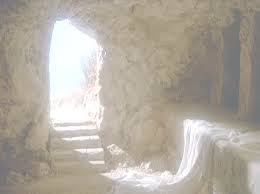
    Easter or Resurrection Sunday is the day the tomb of Jesus is found empty and when the risen Messiah appears risen after His crucifixion on a Corss
    HE IS RISEN!

    .. some of the guards went into the city and told the leading priests what had happened.

    A meeting with the elders was called, and they decided to give the soldiers a large bribe. They told the soldiers,

    “You must say, ‘Jesus’ disciples came during the night while we were sleeping, and they stole his body.’ If the governor [Pontius Pilate] hears about it, we’ll stand up for you so you won’t get in trouble.”

    So the guards accepted the bribe and said what they were told to say.

    Their story spread widely among the Jews, and they still tell it today.

    [.. reports the Disciple Matthew Levi, who recorded his Gospel in Hebrew about 30 years later.

    Matthew 28:11-15 NLT


    Who IS this CHRIST JESUS –crucified for our sins and Risen?


    Talk of JESUS .com logo with earth Mark 16:15 Comment on Scripture + Share the Gospel
    TalkofJESUS.com

  • What happened to Peter?

    What happened to Peter?

    Jerusalem must have been all abuzz with the questions of yet another unfolding mystery involving the Apostles. What happened to this Apostle of Jesus?

    What happened to Simon Peter?

    How did this leading Disciple of Jesus escape? Peter could not possibly have come to our gate since Herod has him under the guard of sixteen men?

    As we witnessed previously in a scene from Acts of the Apostles 12:13-14 in His Angel at the Gate:

    A servant-girl named Rhoda.. ran in and reported that Peter was standing in front of the gate.

    Impossible, would be their first thought.

    “You are out of your mind!”

    But Peter continued knocking, and when they opened the door, they saw him and were astounded.

    Acts of the Apostles 12:16 LSB

    What happened to Jesus’ mission?

    photo of earth from the moon

    It is the year of our Lord [A.D.] 44.

    It has been fourteen years since the Holy Spirit first anointed the saints in Jerusalem to Go into all the world and proclaim the Gospel.

    Peter is not going to remain in Jerusalem.

    Peter commands a continued mission

    .. they saw him and were astounded.

    ἐξίστημι amazed – out of their wits (in the wonder of seeing Peter)

    Luke once again on this day uses this same description as Pentecost when the Church sees Peter alive and in person, even though they had fully expected Herod to execute the Apostle as he had James.

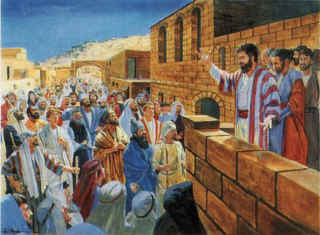
    Peter preaching from a balcony in Jerusalem on pentecost

    So they were astounded and marveling, saying, “Behold, are not all these who are speaking Galileans? .. And they all continued in astonishment and great perplexity, saying to one another, “What does this mean?”

    Acts of the Apostles 2:7,12 – Pentecost [~A.D.30] when Peter proclaimed Christ crucified and risen from death.

    Astonishing that a girl is raised from the dead by Peter in Joppa! Amazing that the Holy Spirit had also filled Samaritans and Roman soldiers in Caesarea as Peter and other disciples of Jesus had reported to the Church in Jerusalem.

    And all the circumcised believers who came with Peter were astounded that the gift of the Holy Spirit had been poured out on the Gentiles also.

    Acts of the Apostles 10:45 LSB

    Today amazingly, Peter has a command for the Church as the Apostle will address them once more in Jerusalem:

    But motioning to them with his hand to be silent, he recounted to them how the Lord had led him out of the prison.

    Meanwhile, back at Herod’s palace..

    Herod Agrippa I had seized Peter during the time of the Passover when great crowds always gathered in Jerusalem as they had years before when the Jews crucified Jesus on a Roman cross.

    The king’s recent execution of James had so pleased the Jews that now Herod would kill Peter. (It would be great political theatre for this friend of Rome now gaining some cooperation from the religious parties of Jerusalem.) Herod had a high-security guard of sixteen men watch over Peter during every watch of the night. BUT..

    Acts 12:18

    Now when day came, there was no small disturbance among the soldiers as to what had become of Peter.

    A report of amazement from these sixteen elite guards, two who were chained to Peter while two others were on guard at the Herod’s prison door.

    And when Herod had searched for him and had not found him, he examined the guards..

    Remember back fourteen years ago, before Herod manipulated his way back into power?

    Luke 23:

    8 Now when Herod saw Jesus, he rejoiced greatly; for he had wanted to see Him for a long time, because he had been hearing about Him and was hoping to see some sign performed by Him. And he questioned Jesus in many words, but He answered him nothing..

    11 And Herod with his soldiers, after treating Him with contempt and mocking Him, dressed Him in a bright robe and sent Him back to Pilate. Now Herod and Pilate became friends with one another that very day; for before they had been enemies with each other.

    Leaving Jerusalem

    King Herod Agrippa I

    Acts 12:19

    .. he examined the guards and ordered that they be led away to execution. Then he went down from Judea to Caesarea and was spending time there.

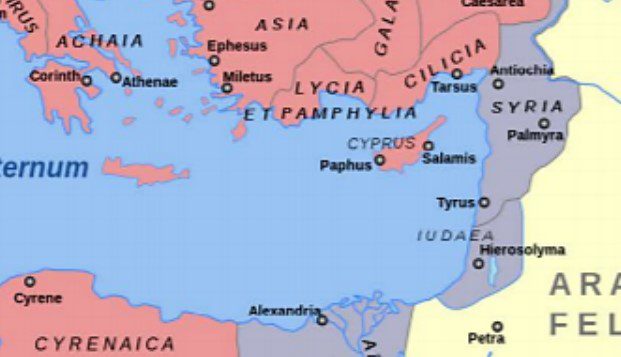
    Judaea of Agrippa II before Rome destroys Jerusalem

    Caesarea Palaestinae has been the capitol of Roman Judaea since AD 6 & is the residence of Herod Agrippa (and soon Agrippa II),

    not Hierosolyma (as the Roman’s call Jerusalem).

    And on an appointed day Herod, having put on his royal apparel and sitting on the judgment seat, began delivering an address to them [an audience of representatives from Tyre and Sidon]. And the assembly kept crying out, “The voice of a god and not of a man!”

    And immediately an angel of the Lord struck him because he did not give God the glory, and he was eaten by worms and breathed his last.

     Marcus Julius Agrippa I - b. 10 B.C. d. A.D. 44

    P.S. Soon, Manaen, who had grown up with Marcus Agrippa in the court of Tiberius Caesar Augustus, will join the Apostle Paul and many disciples of the Way in Antioch, from where they will lead the Church on missions into the all the world, proclaiming the Gospel of Jesus Christ.

    The Apostle Simon Peter

    .. he recounted to them how the Lord had led him out of the prison. And he said,

    “Report these things to James and the brothers.”

    Then he left and went to another place.

    Of course the James to whom Peter refers is NOT the first martyred Apostle James, but the biological half-brother of Jesus who is now a disciple of the Way after Jesus’ resurrection and ascension.

    Even though Saul no longer persecutes the Church, King Herod and the Jews of Jerusalem still pursue the Apostles.

    We will not see Peter for some time until after A.D. 44

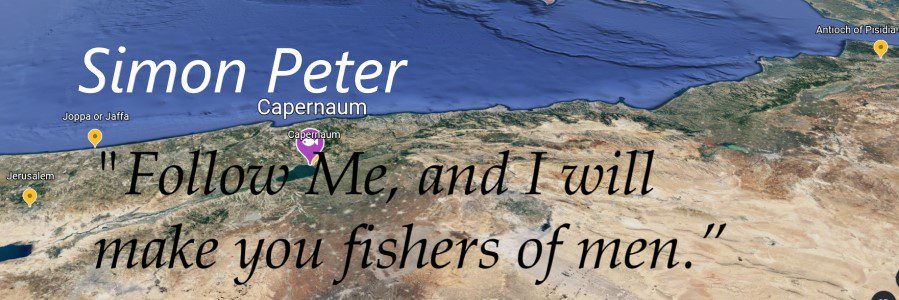
    Simon Peter Capernaum Joppa Jerusalem Antioch more acts of Peter

    Peter certainly could have returned to Capernaum to be with his wife and family. But the Apostle will return to Jerusalem at times as we will see later in Acts of the Apostles.

    And when Herod had searched for him and had not found him, he examined the guards and ordered that they be led away to execution.

    But the word of the Lord continued to grow and to be multiplied.

    Acts of the Apostles 12:24, after Peter escaped from Jerusalem
    in ~AD 44 after proclaiming the Gospel of the risen Christ Jesus for fourteen years.

    25 And Barnabas and Saul [Paul] returned to Jerusalem, fulfilling their ministry, taking along with them John, who was also called Mark.

    Then what happened to Peter?

    For Your Information (Peter’s witness and leadership continues after this astounding event in Jerusalem):

    All dates approximate. Source for most is Rose Guide to the Book of Acts.
    • AD 44-48 – The predicted famine [Acts 11] during the reign of Claudius takes place; Barnabas and Saul of Tarsus will bring a collection from the churches to Jerusalem for distribution.
    • AD 49 – A council of Church leaders, including Peter, meet in Jerusalem [Acts 15].
      • This, of course, is five years after Peter has left Jerusalem after being freed by an angel.
    • AD 49 – Luke, who has recorded Peter’s Gospel and the acts of the Apostles (so far) departs Jerusalem with Paul on his second missionary journey.
    • AD 50 – John Mark, who had accompanied Paul for part of his first missionary journey, writes his Gospel.
    • AD 64-65 [twenty years after Peter escapes Herod]- Peter writes two letters to the Church
    • Sometime after a Jewish revolt in AD 66, Nero will execute Peter and many others in Rome.

    what happened to Peter
    Jesus said to them, ” “Go into all the world and preach the gospel to all creation. – Gospel of Mark 16:15
    ACTS of the Apostles will continue on mission, God-willing, for your comments and witness of the 21st c. Church. - RH