Introduction
God and Christ became incarnate in order to restore Their personal relationship with sinful man.
Roger@TallkofJesus.com
God and Apostles, Disciples of men
Our purpose in introducing Paul’s final epistle to a pastor is:
1. to reintroduce you to the Apostle Paul and
2. to reacquaint you with Timothy, a disciple of Paul who served him in varying roles,
BOTH whom we’ve met in Acts of the Apostles and other epistles.
Let us begin with God
(says the teacher to his class).
God — YHWH the LORD — Is One.
One in Being. One in Essence. One in Substance.
There IS no other god.
God IS the Creator of all things and of all mankind.
He had a relationship in the beginning of time — before which He Exists and after which He Exists — the LORD’s relationships are perfectly personal.
God IS: Father, Son — Jesus Christ, and the Holy Spirit.
Christ, Apostles and Disciples
The Apostle Paul writes to Timothy in his first epistle:
This is a faithful saying and worthy of all acceptance, that Christ Jesus came into the world to save sinners, of whom I am chief.
First letter of the Apostle Paul to Timothy
Jesus, the incarnate Son of God the Father, taught the Gospel with all perfection to men for three years.
The Twelve Disciples (which included neither Paul nor Timothy) followed the Lord, ate and slept with Jesus — they all knew the incarnate Son of God personally.
Consider the interpersonal relationships connecting each of these roles as defined by Scripture and what the Lord Jesus, our Teacher, instructs:
Disciple (follower), Master (teacher), Servant (slave) and Lord
The Disciples Matthew, John and Peter were all present with the incarnate Christ Jesus personally when the Lord said this:
The disciple is not above his master, nor the servant above his lord.
Gospel of Matthew 24:14 – Jesus’ to The Twelve Disciples; Instructions for Service & meaning of discipleship – KJV
μαθητής – mathētēs – disciple (268x) – a learner, pupil, one who follows one’s teaching:
The Twelve followed JESUS for three years, discipleship at its most personal.
Furthermore, many others would follow JESUS’s teachings as ‘Christians’ chosen by God for the Way of eternal life.
Apostles to the Jews and Gentiles
Of course from the beginning Jesus knew that Judas would betray Him and that a disciple Mathias would be chosen to replace the betrayer of Christ as a twelfth Apostle to the Jews.
Christ had taught and trained the Twelve how they would become Apostles — primarily, but not exclusively, to their fellow Jews —after His death, resurrection and ascension.
Simon Peter, a servant and an apostle of Jesus Christ, to them that have obtained like precious faith with us through the righteousness of God and our Saviour Jesus Christ:
2 Peter 1:1 KJV
Paul also refers to himself as an Apostle, greeting his disciples (followers) in his first epistle and this final letter.
Paul, an apostle of Jesus Christ by the will of God, according to the promise of life which is in Christ Jesus,
To Timothy, my dearly beloved son:
2 Timothy 1:1-2a KJV
So who are apostles?
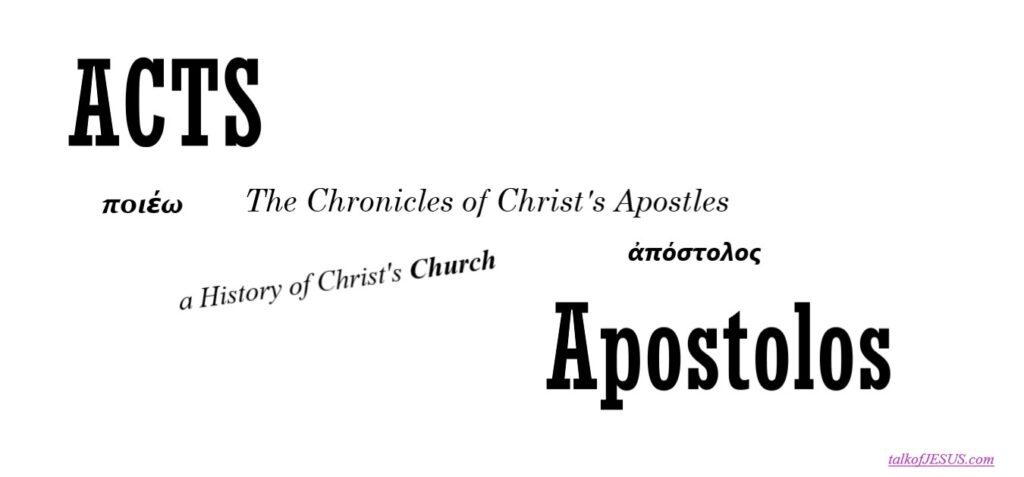
Apostolos – a delegate, messenger, one sent forth with orders
- specifically applied to the twelve apostles of Christ
- in a broader sense applied to other eminent Christian teachers
- – of Barnabas of Timothy and Silvanus
Apostles are ‘sent out’ by Christ.
As in the case of the Twelve and the Apostle Paul, the Lord himself instructed them Personally — that is, the Person of Jesus sent these Apostles out into the world personally.
Other apostles continued to be ‘sent out into all the world’ by the Holy Spirit after Jesus’ ascension, as Luke records for us of the day of Pentecost in ACTS 1.
As we learned from Acts of the Apostles that after the AD 49 Council in Jerusalem, Peter, Paul, John and all others were sent out ‘first to the Jews,’ but also into gentile areas of the Roman Empire (mostly Hellenist or Greek provinces) to include ALL as follows of Christ as part of each local church.
Jesus is Lord
Note that Jesus Christ refers to the Father as Lord (Kyrios in their common Greek language of the Roman Empire) with an authority and meaning no different than the original Hebrew scripture (Yahweh).
“Teacher, which is the great commandment in the Law?”
And He said to him,
“‘YOU SHALL LOVE THE LORD YOUR GOD WITH ALL YOUR HEART, AND WITH ALL YOUR SOUL, AND WITH ALL YOUR MIND.’
Matthew 22:36-37 LSB
Saul, a Jew of Jews, sent out by a Master crucified and risen!
About five years after the Jews of Jerusalem had crucified Jesus, a young disciple of Gamaliel witnessed the stoning of a follower of The Way.
They went on stoning Stephen as he was calling out and saying, “Lord Jesus, receive my spirit!” Then falling on his knees, he cried out with a loud voice, “Lord, do not hold this sin against them!” And having said this, he fell asleep.
Acts of the Apostles 7:59-60 LSB
Stephen, even in his dying breath, called JESUS, “Lord” – twice.
And this young disciple of the rabbi Gamaliel had witnessed it personally.
Saul of Tarsus would become an apostle of the Sanhedrin specifically sent out to continue persecuting Christians.
But then, as we know, Christ appeared to Saul and instructed this new and unwilling (at first) Apostle to go to the Gentiles.
Paul frequently writes that He is a slave (doulos) of JESUS or God(or of the gospel). The Lord Jesus himself points to the service required of this most personal relationship.
Many translations prefer servant to slave, but it is the same Greek word: doulos.
The disciple is not above his master, nor the servant above his lord.
The Apostle Paul describes himself in another pastoral epistle written about the same time as his two letters to Timothy:
Paul, a servant G1401 of God, and an apostle of Jesus Christ, according to the faith of God’s elect, and the acknowledging of the truth which is after godliness;
Epistle of Paul to Titus 1:1
Timothy – Paul enlists a disciple of The Way
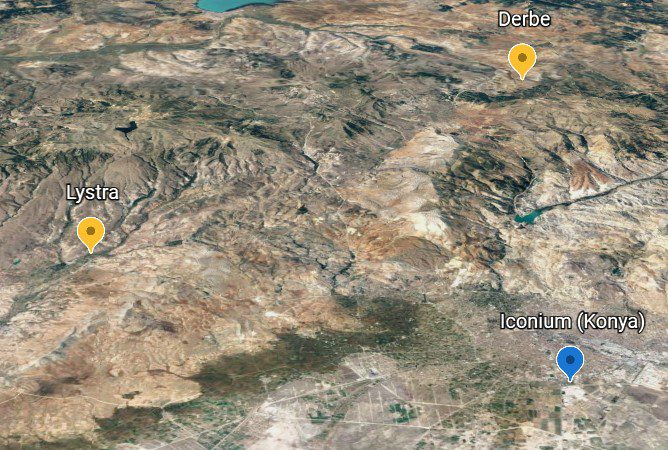
Now Paul also arrived at Derbe and at Lystra.
And behold, a disciple was there, named Timothy,
the son of a Jewish woman who was a believer,
but his father was a Greek,
Acts of the Apostles 16:1
During Paul’s second missionary journey, which had begun inland through the mountains northwest of Tarsus in rural Galatia. While visiting churches established by Barnabas and him on a first missionary journey, the Apostle meets a young Timothy — a Greek, because of his father, but brought up as a Christ-follower by his mother(a Jew, as Paul had been) and Timothy’s grandmother.
A brief introduction of Timothy (Τιμόθεος – Timotheos)
Timothy's early journeys are found in Acts of the Apostles.
~AD 49
Timothy joined Paul and Silas on mission, staying behind at Berea for a time with Silas. Paul, later commands the two by the Spirit to join him in Athens from where the trio proceed to Macedonia.
Paul then ‘sent into Macedonia two of them that ministered unto him, Timotheus and Erastus; but he himself stayed in Asia for a season.
Acts 19:22 KJV
We observe how personal all of the mentoring relations of the Apostle remain to Paul as Luke records those with the Apostle when once again the Jews laid wait to capture and kill him.
Paul was accompanied by Sopater son of Pyrrhus from Berea,
Aristarchus and Secundus from Thessalonica,
Gaius from Derbe, Timothy, and Tychicus
and Trophimus from the province of Asia.
Acts of the Apostles 20:4 Berean Standard Bible
We will mention more of Timothy's crucial later pastoral roles later in this epistle.
Timothy wrote other epistles with Paul :
It is important for us to note that these Pastoral Epistles make known the Spirit-directed teaching of the Apostle Paul we must study, rather than focus on any pastors or saints to whom Paul writes, such as Timothy.
- ~AD 50-51
- ~AD 55-56 the Apostle Paul writes:
- 1 Corinthians with Sosthenes and
- 2 Corinthians with Timothy
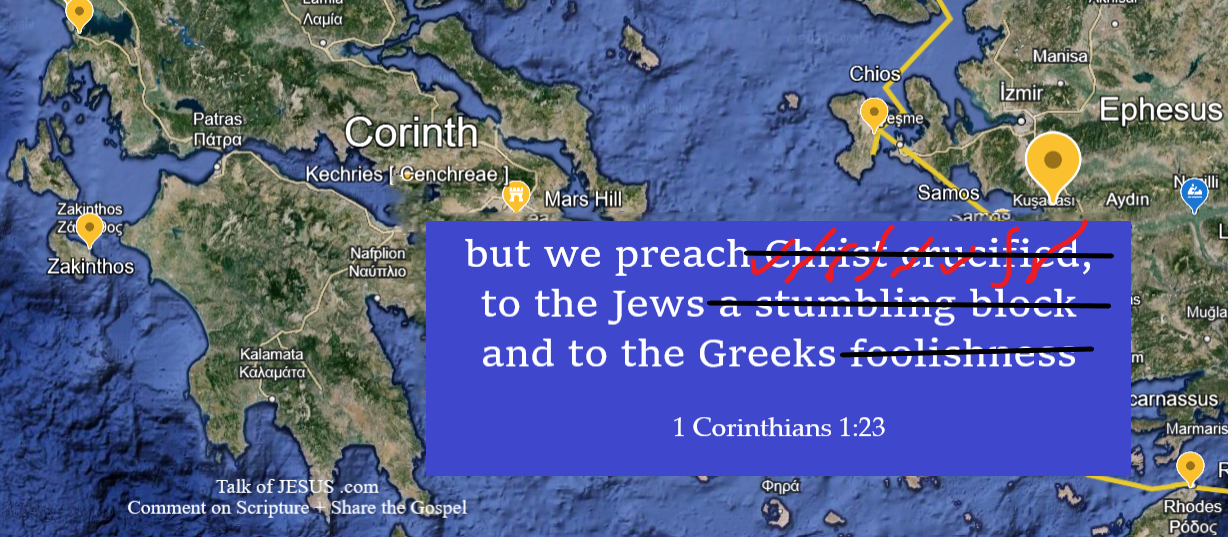
*graphic from a 2024 TalkofJESUS SERIES Post: Rebuke of ministers that perish without the Cross
- ~AD 60-62 The Apostle Paul writes to:
- the Ephesians
- the Philippians
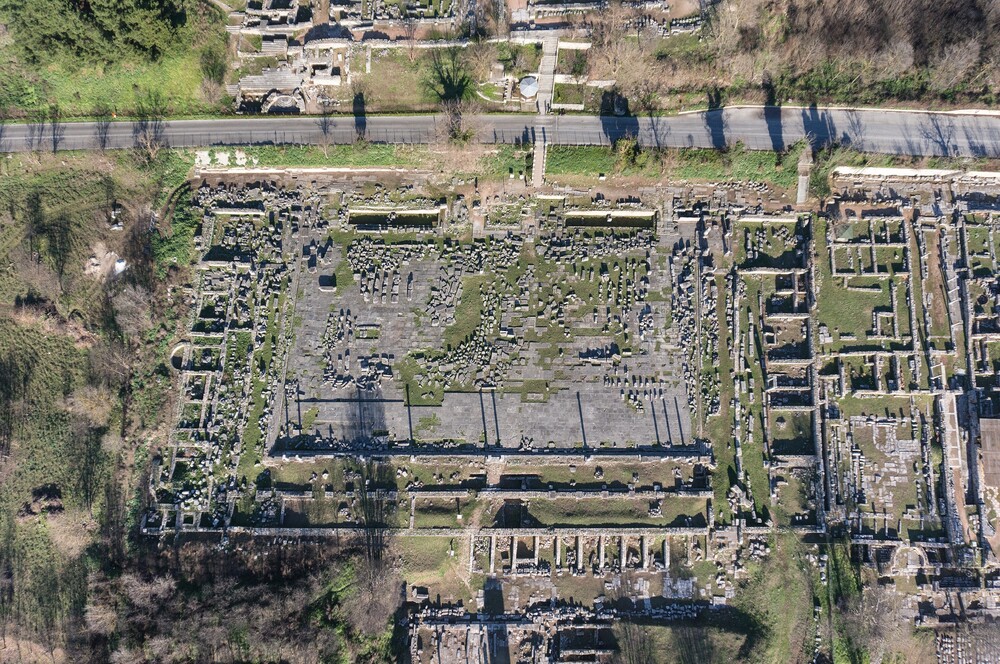
Archaeological Site of Philippi: General view of the forum with adjacent agora marketplace
Paul and Timothy, servants of Christ Jesus,
To all God’s holy people in Christ Jesus at Philippi, together with the overseers and deacons:
Philippians 1:1 NIV
- the Colossians, with Timothy
- and a personal plea along with Timothy to Philemon, concerning Onesimus.
NEXT: 2 Timothy 1:
timotheos agapētos teknon
To Timothy, my beloved son

Comment on Scripture – Share the Gospel
Leave a Reply